
PRP for Low Back Pain in Miami
Low back pain is one of the most common musculoskeletal complaints in adults — and one of the most undertreated at its source. Many patients cycle through pain medications, steroid injections, and physical therapy without addressing the underlying tissue damage driving their symptoms. Platelet-rich plasma (PRP) therapy offers a different approach: using your body’s own growth factors to support healing in the structures responsible for your pain.
At our Miami clinic, Dr. William Bonner — part of the Regenexx network — performs image-guided PRP injections for low back pain, targeting the specific structures contributing to each patient’s symptoms with precision and care.
What Causes Low Back Pain That May Respond to PRP?
PRP therapy is most effective when low back pain is driven by structural tissue injury or degeneration rather than purely neurological or mechanical causes. Conditions that commonly respond to PRP include:
- Lumbar disc degeneration and disc herniations
- Facet joint arthritis and facet-related pain
- Sacroiliac (SI) joint dysfunction
- Lumbar muscle and ligament injuries
- Chronic low back pain that has not responded to other conservative treatments
During your consultation, Dr. Bonner will review your history, imaging, and exam findings to determine whether PRP is appropriate for your specific diagnosis.
How Does PRP Work for Low Back Pain?
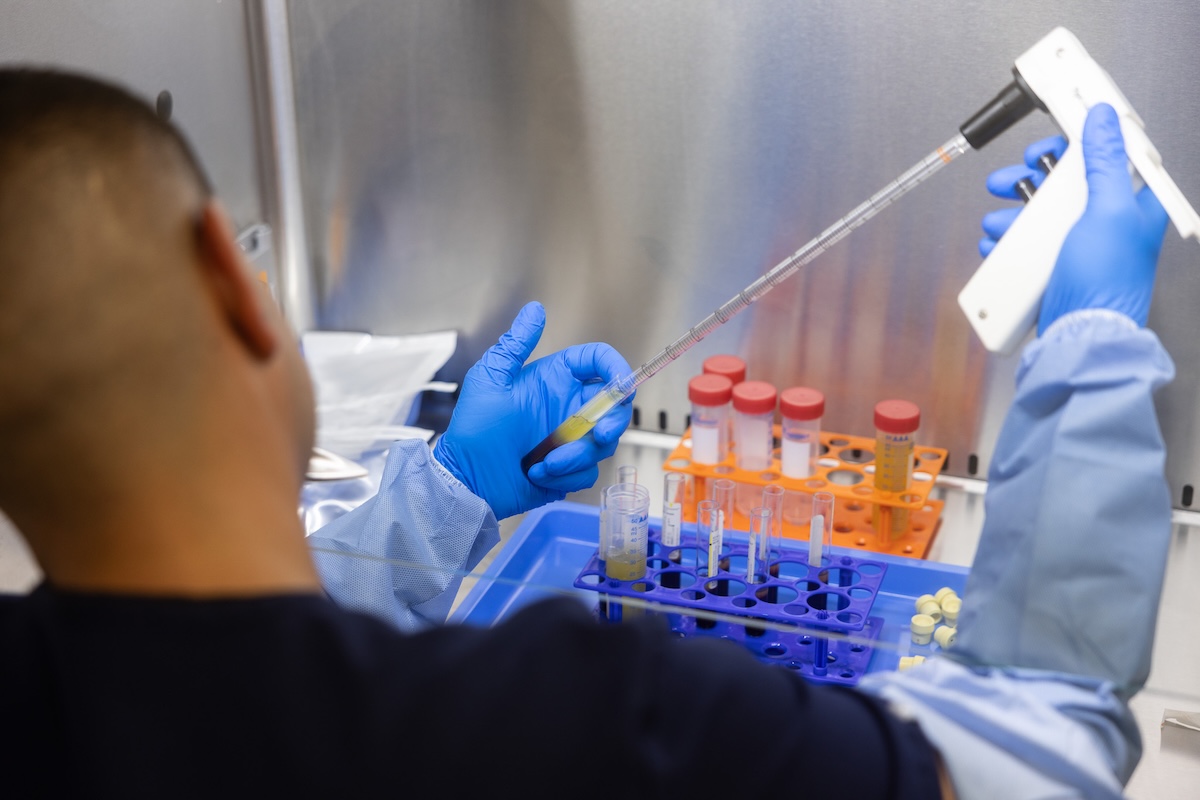
PRP is created by drawing a sample of your own blood and processing it to concentrate the platelets and growth factors. This concentrated solution is then injected precisely into the damaged tissue under image guidance — usually fluoroscopy (or x-ray) — to ensure accurate delivery.
Once injected, the growth factors in PRP work to:
- Reduce chronic inflammation in the affected structures
- Stimulate repair cells to migrate to the injury site
- Support collagen and disc matrix regeneration
- Modify the local environment to slow ongoing degeneration
Unlike cortisone injections that mask inflammation temporarily, PRP targets the biological processes underlying tissue breakdown.
PRP vs. Cortisone Injections: What’s the Difference?
Cortisone (corticosteroid) injections have been used for decades to reduce joint inflammation and pain. While they can provide effective short-term relief, research has shown that repeated cortisone injections may actually accelerate cartilage breakdown over time. PRP takes a fundamentally different approach:
| Cortisone Injection | PRP Therapy | |
| Mechanism | Suppresses inflammation | Promotes healing and tissue repair |
| Source | Synthetic steroid | Your own blood platelets |
| Duration of Relief | Weeks to a few months | Months to over a year in many cases |
| Effect on Tissue | May accelerate cartilage loss with repeated use | Supports tissue repair and regeneration |
| Repeat Treatments | Limited due to tissue damage risk | Can be repeated safely as needed |
| Best For | Acute flare-ups needing quick relief | Chronic conditions, tendon injuries, early to moderate arthritis |
Dr. Bonner will discuss whether PRP, cortisone, or another approach is most appropriate for your specific condition and treatment goals.
What to Expect from PRP Treatment for Low Back Pain
PRP therapy for the lumbar spine is performed in our Miami clinic and is a same-day procedure – meaning your blood is drawn, processed, and reinjected all on the same day. Most patients experience mild soreness at the injection site for a few days following the procedure. The full therapeutic response to PRP develops gradually over 6–12 weeks as the growth factors stimulate tissue repair.
Some patients with low back pain require a series of PRP injections to achieve optimal results. Dr. Bonner will outline a personalized treatment plan at your consultation based on the severity of your condition and your response to initial treatment.
Am I a Good Candidate for PRP for Low Back Pain?
You may be a good candidate for PRP if you:
- Have chronic low back pain lasting more than 3 months
- Have been diagnosed with disc degeneration, facet arthritis, or SI joint dysfunction
- Have not achieved lasting relief from physical therapy, steroid injections, or other interventional procedures
- Want to avoid surgery or delay surgical intervention
- Prefer a treatment that uses your own biology rather than synthetic medications
PRP may not be appropriate for patients with active infection, certain blood disorders, or those on specific anticoagulant medications. Dr. Bonner will review your full medical history to confirm candidacy.
Why Choose a Regenexx Provider for PRP Therapy?
Not all PRP is created equal. The quality of your PRP treatment depends heavily on how the platelets are processed and how precisely they are delivered. As a Regenexx provider, Dr. Bonner offers several important advantages:
- Advanced lab processing that produces higher platelet concentrations and customizable PRP formulations based on your specific condition
- Every injection performed under real-time image guidance (ultrasound and/or fluoroscopy) — never “blind” injections
- Extensive outcome tracking through the Regenexx patient registry, the largest in regenerative orthopedics
- A physician network specializing exclusively in interventional orthopedics — not a general practice offering PRP as an add-on service
- Evidence-based protocols refined through over a decade of clinical use and published research
Recovery After PRP Treatment
PRP therapy is an outpatient procedure and all patients go home the same day. Recovery is generally straightforward, but it’s important to understand that PRP works by stimulating a healing response — so some temporary soreness or pain in the treated area is normal and expected. General recovery guidelines include:
- Mild soreness or swelling at the injection site for 2–5 days is common
- Most patients can resume light daily activities within 1–2 days
- A post-procedure rehabilitation protocol is provided to optimize your recovery
- Avoid NSAIDs (ibuprofen, naproxen, etc.) for a specified period after treatment, as these can interfere with the platelet-mediated healing process
- Initial improvement is often noticed within 4–6 weeks, with continued progress over 2–3 months
- Some conditions may benefit from multiple PRP treatments, but this is determined on an individualized basis
Frequently Asked Questions
How many PRP injections will I need for low back pain?
Most patients receive 1 injection to assess their response. In the case of a partial response to treatment, the patient may be a candidate for a second procedure. Depending on the severity of their condition, some patients may be more likely to require a second procedure. Dr. Bonner will outline a personalized plan at your consultation.
Does insurance cover PRP for low back pain?
PRP therapy is typically not covered by health insurance and is considered an out-of-pocket expense. Our team can discuss pricing and financing options at your consultation.
How is PRP different from a regular cortisone injection for back pain?
Cortisone suppresses inflammation temporarily and may contribute to tissue breakdown over time. PRP uses your own growth factors to actively promote healing and tissue repair — a fundamentally different biological approach.
How long does it take to feel results from PRP for low back pain?
Most patients begin to notice improvement between 4–8 weeks after injection, with continued improvement up to 3–6 months as tissue healing progresses.
Schedule a Consultation
If you are dealing with low back pain and want to explore whether PRP therapy is right for you, we are here to help.
Contact our Miami clinic to schedule an appointment with Dr. Bonner, or book online through ZocDoc for available appointment times (if you do not see availability, please reach out to us directly at 786-522-4959).