
Elbow epicondylitis is a common cause of elbow pain related to overuse or repetitive strain of the forearm tendons. It includes both lateral epicondylitis (tennis elbow) and medial epicondylitis (golfer’s elbow). These conditions can interfere with gripping, lifting, and everyday arm use.
At our Miami clinic, we provide a comprehensive, non-surgical approach to the evaluation and treatment of elbow epicondylitis, focused on symptom relief, functional recovery, and individualized care planning.
Elbow epicondylitis refers to tendinopathy involving the tendons that attach to the bony prominences of the elbow (epicondyles).
Despite their names, these conditions are not limited to athletes and commonly occur in people who perform repetitive arm, wrist, or hand movements.
Symptoms may vary depending on the affected side of the elbow and may include the following:
Symptoms often develop gradually and may persist if untreated.
An important distinction that affects treatment: despite being called “epicondylitis” — the “-itis” suffix implying inflammation — modern histopathological research has established that chronic tennis elbow and golfer’s elbow are primarily degenerative tendinopathies, not inflammatory conditions. Tissue biopsies from chronic epicondylitis show disorganized collagen, angiofibroblastic proliferation, and hyaline degeneration — the hallmarks of degenerative tendinopathy — rather than the acute inflammatory cell infiltrate seen in true tendinitis.
This distinction matters for treatment in a fundamental way: anti-inflammatory treatments (cortisone injections and NSAIDs) target the wrong biological process. They suppress an inflammatory response that, in chronic epicondylitis, is largely absent. This explains why cortisone injections often provide short-term relief but frequently fail to produce lasting improvement — and why repeated cortisone injections have been associated with tendon weakening and higher recurrence rates in the long term.
Regenerative treatments — particularly PRP — are specifically designed to address the degenerative biology of chronic tendinopathy by delivering growth factors that stimulate tenocyte activity, collagen synthesis, and tissue remodeling. This is a fundamentally more appropriate biological match for the condition.
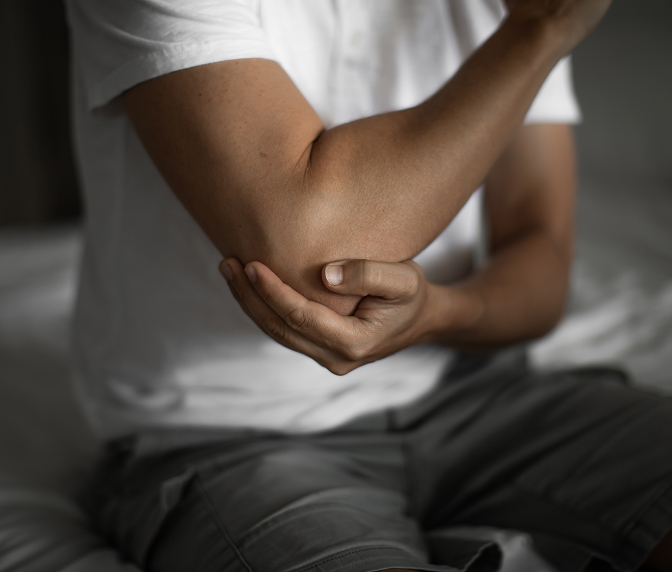
Elbow epicondylitis may develop due to:
These conditions are often degenerative in nature rather than purely inflammatory.
Diagnosis is typically clinical and based on history and physical examination. Evaluation may include:
Detailed activity and symptom assessment
Physical examination of elbow, wrist, and forearm function
Review of prior imaging to rule out osteoarthritis
Ultrasound or MRI in select cases to assess tendon integrity
Imaging findings are interpreted in the context of symptoms, as tendon changes may be present without pain.
Most patients with elbow epicondylitis improve with conservative, non-surgical care.

Physical therapy is a cornerstone of treatment and may focus on:
Programs are individualized to avoid symptom flare-ups.
Appropriate activity modification is critical for tendon recovery — not simply resting the elbow, but modifying how load is applied to the affected tendon. Strategies include:
Medication may be used to relieve symptoms:
Medication is used thoughtfully as part of a broader plan.
In select cases, image-guided injections may be considered:
Procedures are performed using ultrasound guidance to improve accuracy and safety.
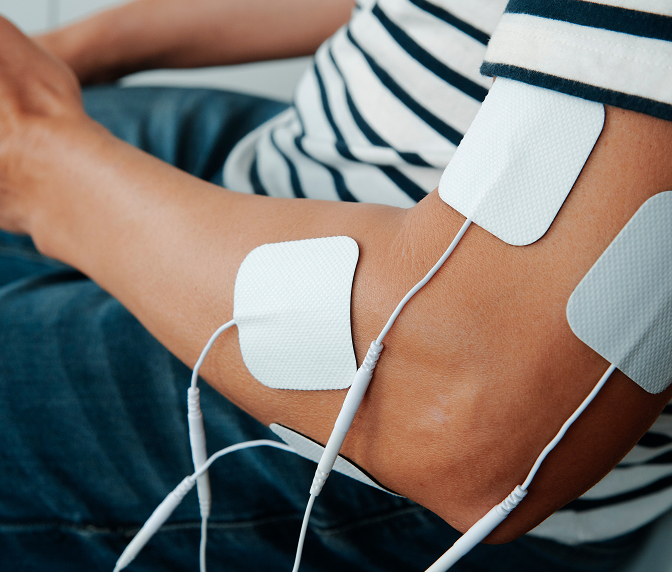
For patients with chronic tennis elbow or golfer’s elbow that has not responded adequately to physical therapy, activity modification, and standard injections, regenerative medicine — particularly PRP — offers the most evidence-based non-surgical option for addressing the degenerative tendon biology driving the condition.
PRP has one of the strongest evidence bases of any regenerative treatment for any tendinopathy — and lateral epicondylitis (tennis elbow) is among the best-studied indications. By delivering concentrated growth factors — including TGF-β, PDGF, and BMP-12 — directly into the degenerative tendon tissue under ultrasound guidance, PRP provides the biological stimulus for collagen synthesis and tenocyte activity that the degenerative tendon cannot generate on its own.
A meta-analysis of 26 randomized controlled trials specifically comparing PRP and corticosteroid injections for lateral epicondylitis had cortisone showing superior short-term relief but PRP producing meaningfully better results at 6 months and beyond.
All PRP procedures at our clinic are performed under ultrasound guidance — allowing real-time visualization of the affected tendon and precise delivery of the PRP into the degenerative tissue rather than the surrounding soft tissue.
For patients with more significant tendon degeneration — particularly those with partial tendon tears identified on ultrasound or MRI — BMAC adds mesenchymal stem cells to the growth factor payload. This is most appropriate when PRP alone has not produced sufficient improvement or when the degree of tendon pathology warrants a more potent regenerative stimulus.
As a credentialed Regenexx network provider, Dr. Bonner performs all elbow regenerative procedures under ultrasound guidance — ensuring precise, image-confirmed delivery to the affected tendon insertion.
| Treatment Type | Purpose | Duration of Impact | Invasiveness |
|---|---|---|---|
| Physical Therapy | Improve movement and function | Long-term with adherence | Non-invasive |
| Medications | Pain and inflammation control | Short-term | Non-invasive |
| Bracing/Support | Reduce stress | Activity-dependent | Non-invasive |
| Injections (steroid) | Reduce inflammation | Weeks to months | Minimally invasive |
| Regenerative Treatments (PRP/BMAC) | Promote healing | Potential long-term | Minimally invasive |
| Surgery (if necessary) | Structural repair | Permanent | Invasive |
Many patients benefit from a coordinated, non-surgical plan before considering surgical intervention.
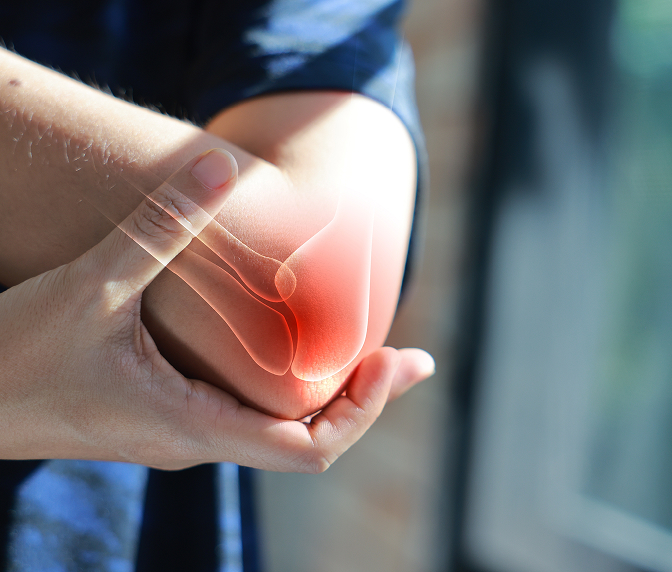
You may be a good candidate if you:
Treatment plans are individualized based on symptoms and activity demands.

Active adults and professionals often place significant stress on the elbows through sports and repetitive movements. Treatment focuses on:
The goal is to help patients remain active and productive while managing symptoms safely and effectively.
Rarely. Many cases of elbow epicondylitis can be treated successfully with non-surgical care including therapy, patience, injections, and regenerative procedures.
When performed by trained specialists using your own biologic materials, regenerative procedures are generally considered safe and may support healing processes. These procedures should always be performed with imaging guidance like ultrasound and fluoroscopy to target very specific structures in or around the elbow joint.
Recovery times vary by condition and treatment. Rehabilitation and regenerative care may take weeks to months for optimal improvement.
Imaging is used when it will meaningfully influence diagnosis or treatment planning. It is often used to assess the severity of epicondylitis or associated tendon tears and guide treatment planning. In cases of elbow epicondylitis, the pain pattern can often overlap those related the shoulder or pinched nerves in the neck, so imaging studies can be useful to help differentiate the etiology of pain.
Cortisone suppresses inflammation effectively — but chronic tennis elbow is primarily a degenerative tendinopathy, not an inflammatory condition. Cortisone reduces short-term pain by quieting what little inflammatory activity is present, but it does nothing to address the underlying collagen disorganization and degenerative changes driving the condition. Repeated cortisone injections have also been associated with tendon weakening and higher recurrence rates. PRP is a more biologically appropriate treatment for the degenerative substrate of chronic epicondylitis.
Most patients receive one to two PRP injections for elbow epicondylitis, depending on the severity of tendon degeneration and their response to initial treatment. PRP is combined with a structured progressive tendon loading program — the rehabilitation component is essential for optimal outcomes and cannot be skipped in favor of injection alone.
If you are experiencing elbow pain, or another painful condition, and want a comprehensive evaluation and non-surgical treatment plan, we are here to help. Contact our Miami clinic to schedule an appointment.
CONTACT US