
Degenerative disc disease (DDD) is a common cause of chronic neck and low back pain. Despite its name, degenerative disc disease is not truly a disease, but rather a condition that describes age-related and mechanical changes within the intervertebral discs. These changes can contribute to pain, stiffness, and reduced spinal mobility.
At our Miami clinic, we provide a comprehensive, non-surgical approach to degenerative disc disease treatment focused on symptom relief, restoring function, improving spinal mechanics, and helping patients avoid unnecessary surgery whenever possible.
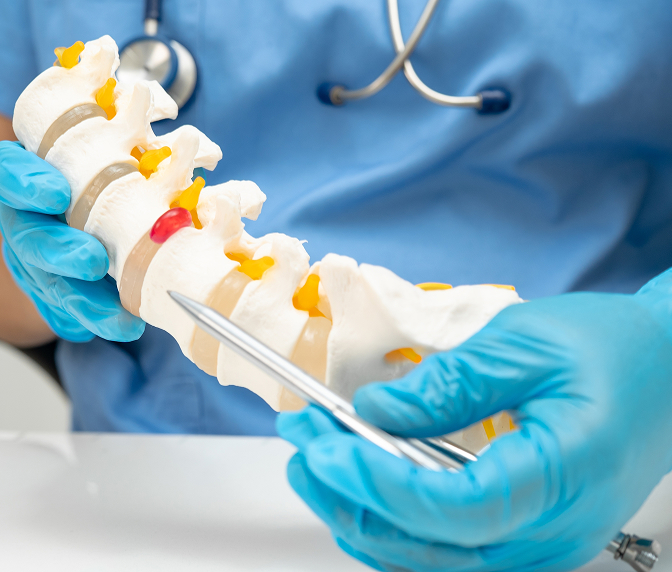
Intervertebral discs sit between the bones of the spine and function as shock absorbers, allowing for normal movement and load distribution. Over time, discs naturally undergo changes, including:
When these changes become painful or contribute to abnormal spinal mechanics, the condition is referred to as degenerative disc disease.
DDD most commonly affects the:
Not all disc degeneration causes symptoms, which is why clinical evaluation is essential.
Symptoms vary depending on the location and severity of disc degeneration. Common symptoms include:
Symptoms may fluctuate over time and are often activity-dependent.

Degenerative disc disease may develop due to a combination of factors, including:
Disc degeneration is a normal part of aging, but symptoms vary widely between individuals.
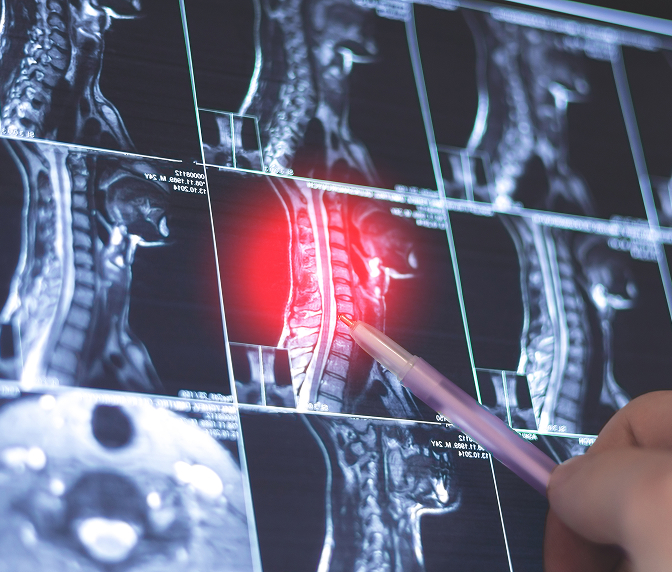
Accurate diagnosis involves correlating symptoms with physical examination findings and imaging results. Evaluation may include:
Detailed medical history and symptom assessment
Physical examination focusing on movement patterns and neurologic function
Gait and posture assessment
Review of prior imaging
MRI or X-rays when clinically indicated
Imaging findings are always interpreted in the context of symptoms, as many people have degenerative changes without pain.
Most patients with degenerative disc disease improve with conservative care.
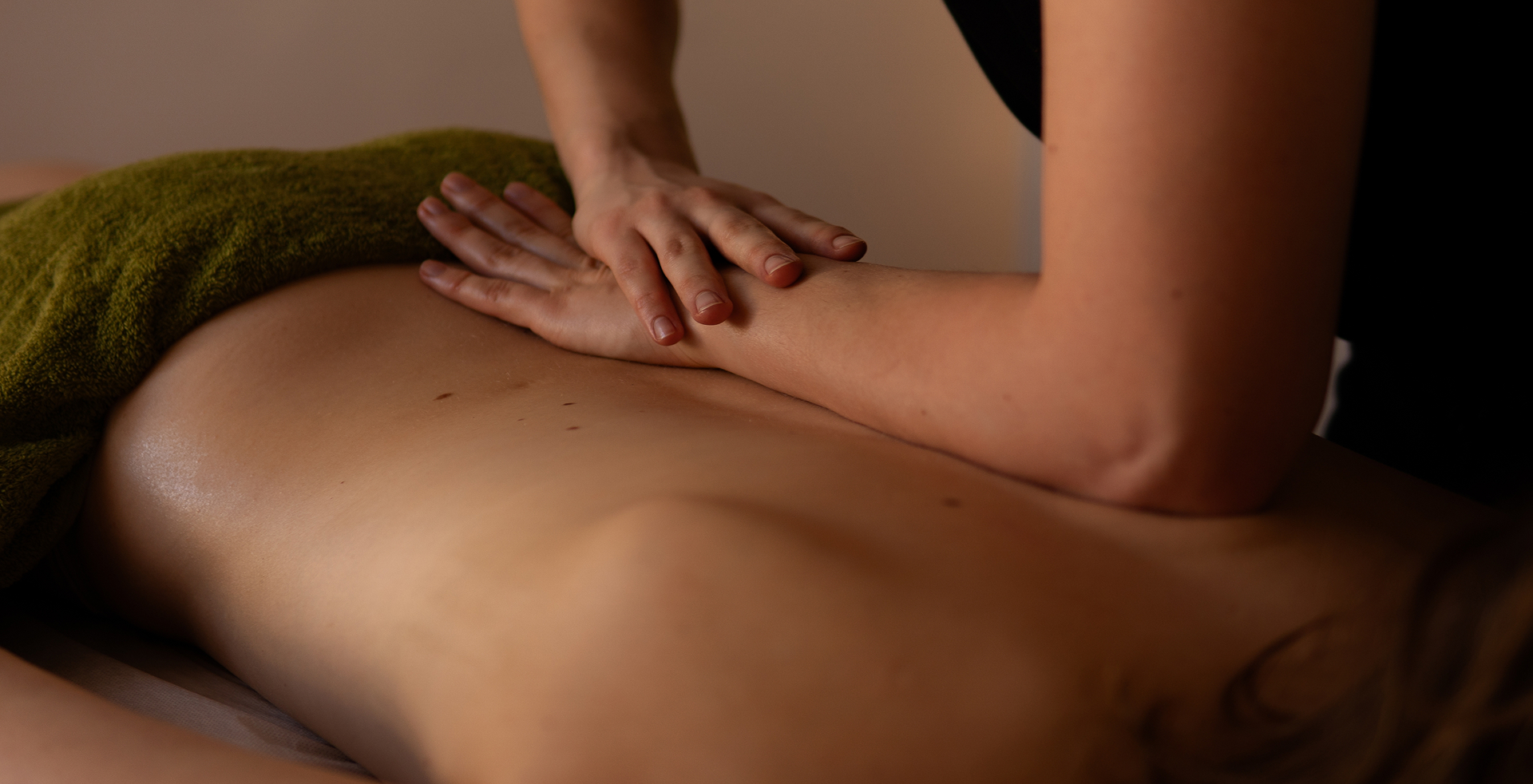
Physical therapy is often a foundational component of treatment and may focus on:
Remaining active within pain limits is generally encouraged.
Medications are used strategically and at the lowest effective dose.
In select cases, injections may be considered to reduce inflammation associated with degenerative disc disease:
These procedures are typically performed using image guidance to improve accuracy and safety and are not intended as long-term standalone solutions.
For patients with degenerative disc disease whose pain is primarily discogenic — arising from the disc itself rather than nerve compression — regenerative medicine offers a biologically targeted approach that goes beyond what epidural steroid injections and physical therapy can achieve. Rather than simply managing inflammation temporarily, regenerative treatments target the disc’s biological environment directly.
An important principle for regenerative treatment of DDD: the entire functional spinal unit at each affected level should be considered — not just the disc in isolation. This means addressing the disc, the facet joints, and the surrounding ligamentous structures as a coordinated unit when appropriate.
Platelet-Rich Plasma (PRP) for Degenerative Disc Disease
PRP concentrates growth factors from your own blood — including TGF-β and IGF-1 — that specifically target disc biology. When delivered periannularly or intradiscally under fluoroscopic guidance, PRP can reduce the chronic inflammatory environment within the disc, support disc cell survival, and modify the biological conditions driving discogenic pain. A randomized trial published in Pain Medicine demonstrated meaningful pain reduction and functional improvement in patients with discogenic low back pain treated with intradiscal PRP at 1-year follow-up (PMID 35344055).
PRP is most appropriate for mild to moderate disc degeneration (Pfirrmann grades II–IV) where meaningful disc cell activity remains and the biological payload has tissue to work with.
BMAC Stem Cell Therapy for Degenerative Disc Disease
For patients with more advanced disc degeneration, BMAC adds mesenchymal stem cells to the growth factor payload — making it the most potent non-surgical biological intervention currently available for discogenic pain. Intradiscal BMAC delivers your own living stem cells directly into the nucleus pulposus under fluoroscopic guidance, where they can support disc matrix maintenance, suppress pro-inflammatory cytokines driving discogenic pain, and potentially slow further disc degeneration.
A study published in the International Journal of Spine Surgery demonstrated meaningful improvements in pain and function following intradiscal biologics in carefully selected patients with degenerative disc disease (IJSS 2025).
Important: Intradiscal injection — whether PRP or BMAC — is a technically demanding procedure that carries real procedural risks including discitis. It is performed only in carefully selected patients under strict sterile technique and fluoroscopic guidance by a physician with specific training in this technique. As a credentialed Regenexx network provider, Dr. Bonner follows evidence-based protocols for all intradiscal procedures. Patient selection is rigorous — not every patient with DDD is an appropriate candidate, and Dr. Bonner will give you an honest assessment at consultation.
| Treatment Type | Main Purpose | Expected Duration of Relief | Invasiveness |
|---|---|---|---|
| Physical Therapy | Improve mobility, posture, and strength | Long-term with compliance | Non-invasive |
| Medications | Reduce pain or inflammation | Short-term | Non-invasive |
| Steroid Injections | Reduce inflammation and nerve irritation | Weeks to months | Minimally invasive |
| Regenerative Medicine (e.g., PRP / BMAC Stem Cell Therapy) | Support tissue healing | Long-term | Minimally invasive |
| Surgery | Correct structural issues | Permanent | Highly Invasive |
Most patients benefit from a layered approach that incorporates rehabilitation, activity modification, and targeted interventions.
You may be a good candidate if you:
Treatment plans are individualized to each patient’s condition and goals.

Miami residents are highly active, and repetitive lifting, rotational sports, running, and gym-based training can place added stress on the spine. Treatment for active adults focuses on:
We aim to keep patients active while managing their condition safely.
Severe pain, persistent symptoms, weakness, numbness, or changes in bowel or bladder control warrant immediate medical attention.
No. The majority of symptomatic degenerative disc disease cases improve with non-surgical treatments such as physical therapy, medications, injections, and regenerative options. Additionally, patience is paramount when treating degenerative disc disease.
Imaging studies like X-ray and MRI are ordered when it will meaningfully influence diagnosis or treatment planning. Imaging studies are not always necessary, and not always covered by insurance, when treating spine pain. Additionally, degenerative disc disease is often a normal finding on imaging studies, with findings of bulging discs being very common.
Recovery varies depending on the cause of pain, adherence to therapy, and overall health. Many patients experience improvement over several weeks to months.
Discogenic pain arises from the intervertebral disc itself — specifically from sensitized nerve endings in the annulus fibrosus and from the pro-inflammatory chemical environment within a degenerated disc. It is characteristically worsened by sitting, forward flexion, and Valsalva maneuvers (coughing, sneezing). Discogenic pain is distinct from radicular pain (from nerve root compression), facet joint pain, and sacroiliac joint pain — and accurate diagnosis of the primary pain generator is essential before any regenerative treatment is recommended.
Complete reversal of disc degeneration is not a realistic expectation. However, research suggests that intradiscal biologics — PRP and BMAC — can support disc cell survival, suppress the pro-inflammatory environment driving ongoing degeneration, and potentially slow the progression of disc disease. The goal is meaningful pain reduction and functional improvement alongside deceleration of the degenerative process — not restoration of a normal disc.
Pfirrmann grade is an MRI classification of disc degeneration from Grade I (normal) to Grade V (complete collapse). It matters for regenerative treatment planning because intradiscal biologics work best when meaningful disc cell activity remains — typically Pfirrmann grades II through IV. Grade V discs with complete collapse and no remaining disc height are generally not appropriate candidates for intradiscal treatment because there is insufficient viable tissue to respond. Dr. Bonner reviews your MRI grading at consultation to assess whether your disc degeneration is within the therapeutic window.
If you are experiencing symptoms of degenerative disc disease and want a comprehensive evaluation and non-surgical treatment plan, we are here to help. Contact our Miami clinic to schedule an appointment.
CONTACT US