
If you’re dealing with persistent knee pain from osteoarthritis or a soft tissue injury, chances are someone — a primary care doctor, an orthopedic surgeon, or a well-meaning friend — has suggested a cortisone injection. Cortisone shots are among the most commonly performed procedures in musculoskeletal medicine, and for good reason: they’re fast, familiar, and can provide real short-term relief.
But a growing body of research is raising important questions about what happens after those first few weeks — and whether platelet-rich plasma (PRP) injections might be a better option for many patients who are looking for longer-lasting results.
As a Regenexx-trained interventional pain physician, I’ve been watching this evidence develop closely. Here’s what the current data actually show, and what I discuss with patients in my practice.
How Cortisone and PRP Work Differently
Both cortisone and PRP are injected directly into the knee joint, but their mechanisms — and their intentions — are fundamentally different.
Cortisone (corticosteroids) is an anti-inflammatory medication. It works by suppressing the immune and inflammatory response in the joint, which reduces swelling and pain. The benefit is real but largely symptomatic — it doesn’t address the underlying tissue damage, and it wears off.
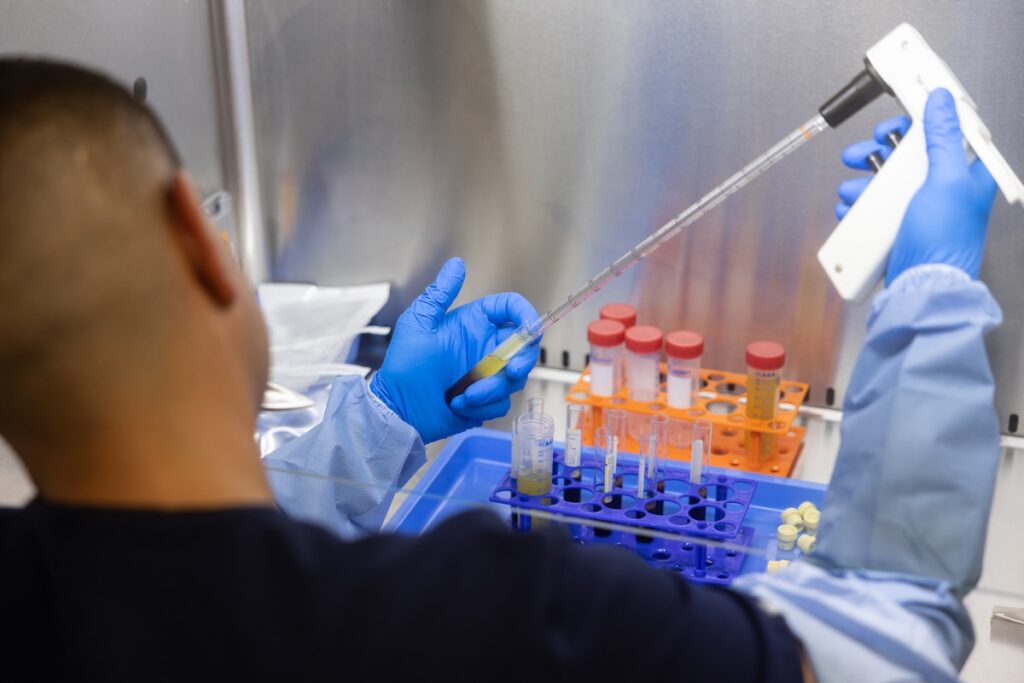
PRP (platelet-rich plasma) takes a different approach. We draw a sample of your own blood, concentrate the platelets and growth factors, and inject that concentrate into the joint. The goal is to shift the tissue environment toward healing and regeneration — reducing inflammatory signaling while supporting cartilage and soft tissue health over time.
This is why the two treatments tend to diverge in outcomes when you follow patients beyond the first month or two.
What the Research Shows
Over the past several years, high-quality comparative research — including multiple systematic reviews and meta-analyses of randomized controlled trials — has consistently pointed in the same direction.
Cortisone: Effective Early, but Limited
A 2024 systematic review published in Knee Surgery, Sports Traumatology, Arthroscopy (Bensa et al., PMID 38294103) analyzed trials comparing cortisone to placebo and found that cortisone provides a clinically meaningful improvement in pain — but only within the first six weeks. Beyond that window, the benefit over placebo becomes minimal and inconsistent.
A second 2024 review by the same group (Bensa et al., PMID 39222336), pooling 35 randomized controlled trials, found that cortisone and hyaluronic acid performed similarly to each other, but both were inferior to PRP at mid-term and long-term follow-up. The difference with PRP was not just statistically significant — it met the threshold for clinical significance, meaning patients actually felt it.
PRP: Better at 3, 6, and 9 Months
A 2021 meta-analysis in BMC Musculoskeletal Disorders (McLarnon & Bhatt, PMID 34134679) directly compared PRP and cortisone at multiple time points. PRP was statistically and clinically superior at 3 months, 6 months, and 9 months. The study also found that triple PRP injection protocols outperformed single injections — a finding that shapes how I approach treatment planning with patients.
The Largest Meta-Analysis to Date
Earlier this year, a landmark meta-analysis from the Regenexx network (Centeno et al., 2026, International Orthopaedics, PMID 41863556) synthesized data from 62 randomized controlled trials — the largest such analysis to date. PRP was superior to hyaluronic acid, cortisone, and saline. The analysis also identified a quality signal that I find particularly important: PRP preparations using a blood draw volume of at least 40 mL were associated with meaningfully better outcomes. Not all PRP is equivalent.
So Why Does Cortisone Remain So Common?
Fair question. A few reasons:
- It’s fast and broadly available. Most orthopedic and primary care offices can administer a cortisone injection in minutes.
- Insurance covers it. PRP is typically not covered by insurance, which creates an access barrier for many patients.
- For short-term relief — before surgery, for an acute flare, or when nothing else has worked in the near term — cortisone still has a legitimate role.
None of this means cortisone is a bad treatment. It means it’s a treatment with a specific time horizon, and patients deserve to understand that when making decisions about their care.
If someone asks me whether they should get a cortisone shot for knee pain, my answer depends on what they’re trying to accomplish. For quick, short-term relief? Cortisone is reasonable. For sustained improvement over months — especially if they’re trying to avoid or delay surgery — the evidence increasingly supports PRP.
How I Approach PRP for the Knee
Not all PRP is the same, and this is a point I take seriously. As a Regenexx network provider, I follow preparation protocols designed to optimize platelet and growth factor concentration, including draw volumes that align with the outcomes data. I use image guidance for precise intra-articular placement, because accuracy matters.
For patients with knee osteoarthritis, I may recommend a series of injections rather than a single treatment, consistent with the evidence suggesting that multiple injections produce better results than one alone. We follow patients over time to track their progress and adjust as needed.
PRP is one part of what I offer for knee conditions. For patients with more significant joint disease, bone marrow concentrate (BMAC) may be appropriate, which introduces a broader population of regenerative cells alongside platelets. I evaluate each patient individually to identify the right approach.
Frequently Asked Questions
Is PRP painful?
The injection itself involves some mild to moderate discomfort, and it’s common to experience temporary soreness in the knee for a few days after treatment. Most patients tolerate it well. This is different from cortisone, which is typically associated with very little post-injection soreness — one reason patients sometimes perceive it as “working faster” even when the longer-term data tell a different story.
How long does PRP take to work?
PRP is not a quick fix. Most patients begin to notice improvement over the first 4–8 weeks, with continued gains over several months as the tissue responds. This is part of the tradeoff: cortisone may give faster initial relief, but PRP tends to produce more durable benefit over time.
Can I get PRP if I’ve already had cortisone injections?
Yes, generally. We discuss the timing and history of prior injections during the evaluation. Frequent or recent cortisone exposure can affect the tissue environment, so it’s useful context, but it doesn’t automatically exclude you from PRP candidacy.
Does insurance cover PRP?
Most insurance plans, including Medicare, do not currently cover PRP injections. We discuss pricing transparently during the consultation and can help patients understand their options.
The Bottom Line
Cortisone injections have their place — but if you’re hoping for relief that lasts beyond six weeks, the evidence increasingly points toward PRP as the more durable option for knee pain. The data from multiple large, well-designed trials are consistent: PRP outperforms cortisone at three, six, and nine months, and the difference is clinically meaningful.
If you’re in Miami and want to talk through whether PRP or another regenerative approach might be right for your knee, I’d encourage you to schedule a consultation. We’ll review your imaging, your history, and your goals — and put together a plan that makes sense for your specific situation.
Learn more about PRP therapy, knee osteoarthritis treatment, or our full regenerative medicine offerings — or contact us to schedule your consultation.
References
- Centeno CJ, et al. Platelet-rich plasma for knee osteoarthritis: a systematic review and meta-analysis of 62 randomized controlled trials. Int Orthop. 2026. PMID: 41863556.
- Bensa A, et al. Comparative effectiveness of intra-articular injections for knee osteoarthritis: a systematic review and meta-analysis of 35 randomized controlled trials. EFORT Open Rev. 2024. PMID: 39222336.
- Bensa A, et al. Short-term efficacy of corticosteroid injection for knee osteoarthritis: a systematic review and meta-analysis. Knee Surg Sports Traumatol Arthrosc. 2024. PMID: 38294103.
- McLarnon M, Bhatt V. Comparative efficacy of platelet-rich plasma versus corticosteroid injections for knee osteoarthritis. BMC Musculoskelet Disord. 2021. PMID: 34134679.
Disclaimer: This blog post is for educational purposes only and does not constitute medical advice. Results from regenerative treatments vary by individual, and not all patients are candidates. Please schedule a consultation to discuss your specific condition and treatment options.