
Introduction
Lower back pain is one of the most common reasons patients in Miami seek medical care, especially when pain originates from lumbar disc injury or degeneration. While many traditional treatments focus on temporary pain relief, regenerative medicine offers a different approach. Platelet-Rich Plasma (PRP) therapy uses your body’s own healing factors to target the source of disc-related pain and help restore spinal function. Let’s learn more about why Dr. Bonner uses PRP for lumbar disc pain in Miami.
What Is PRP and How Does It Work?
PRP stands for platelet-rich plasma, which is created by concentrating platelets from your own blood. Platelets release growth factors that signal tissue repair and regeneration.
When PRP is injected into injured lumbar discs or supportive spinal structures, it may:
- Reduce inflammation
- Improve tissue healing
- Support disc hydration
- Strengthen surrounding ligaments
Because PRP comes from your own body, there is no risk of rejection or foreign substances.
Common Causes of Lumbar Disc Pain
Lumbar disc pain usually develops gradually, but it can also appear suddenly after lifting, twisting, or a sports injury. Common causes include:
- Degenerative disc disease – age-related disc dehydration and weakening
- Annular disc tears – small tears in the outer portion of the disc
- Disc bulges and herniations – disc material pressing on nearby nerves
- Repetitive strain – prolonged sitting, poor posture, or heavy lifting
- Sports injuries – especially in athletes involved in golf, tennis, CrossFit, and boating activities common in South Florida
Many patients with disc-related pain experience stiffness, difficulty bending, and pain that worsens with sitting or prolonged driving. When nerve irritation is present, pain may radiate into the hips, buttocks, or legs.
Why Dr. Bonner Uses PRP for Lumbar Disc Pain in Miami
The lumbar spine absorbs constant stress from sitting, lifting, twisting, and sports. Over time, discs may weaken, bulge, or tear. PRP supports natural healing without masking symptoms.
PRP may help patients with:
- Lumbar disc degeneration
- Disc bulges or annular tears
- Chronic low back pain
- Sciatica from lumbar irritation
- Facet-related pain
Many Miami patients seek PRP after failing physical therapy, medications, or steroid injections.
How PRP Supports Disc and Ligament Healing
Lumbar discs and spinal ligaments have limited blood supply, which is why they heal slowly. PRP helps overcome this limitation by delivering a high concentration of growth factors directly to the injured tissue.
These growth factors may:
- Stimulate collagen production
- Promote cellular repair and regeneration
- Improve tissue hydration and structure
- Reduce chemical inflammation inside the disc
This regenerative effect is what makes PRP different from medication-based treatments that only suppress symptoms.
Who Is a Good Candidate for PRP for Lumbar Disc Pain?
PRP is not just for elite athletes — it is commonly used in everyday patients looking to avoid surgery. You may be a good candidate for PRP therapy if you:
- Have chronic low back pain lasting longer than 3–6 months
- Have MRI findings showing disc degeneration, disc bulge, or annular tear
- Want to avoid surgery or long-term medications
- Have not had lasting relief from physical therapy or steroid injections
- Want a natural, biologic treatment option
Patients with advanced spinal instability, fractures, or severe nerve compression may require other treatments. A thorough evaluation with imaging is always performed before determining whether PRP for lumbar disc pain in Miami is appropriate.
What the PRP Procedure Is Like
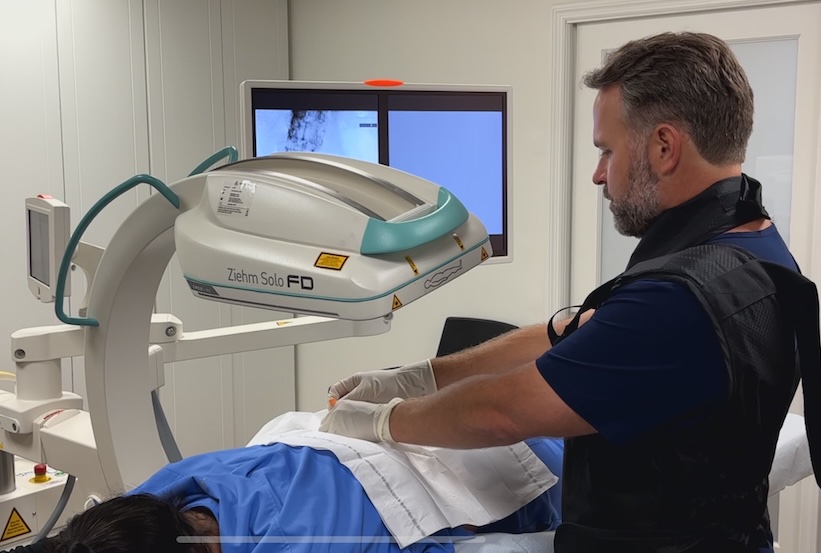
At our Miami clinic, PRP injections are performed using image guidance with fluoroscopy and ultrasound for accuracy. The process includes:
- Blood draw
- Laboratory processing of the blood. This process takes between 30 and 90 minutes depending on the quantity of blood.
- Targeted PRP injection into lumbar structures. The procedure typically takes between 30 and 60 minutes depending on how many levels of the spine are being treated.
The visit typically takes anywhere from 3 to 5 hours total including all phases desecribed.
Why Image-Guided PRP Injections Matter
Accuracy is critical when injecting PRP into lumbar spine structures. Blind injections into the spine increase the risk of poor targeting and reduced benefit.
At our Miami clinic, PRP injections are performed with:
- Ultrasound guidance
- Fluoroscopic (X-ray) guidance
This ensures precise placement into:
- Lumbar discs
- Facet joints
- Supporting ligaments
Precise placement improves outcomes and reduces complications.
What to Expect After PRP
PRP works by stimulating healing, not numbing pain. Improvement happens gradually:
- Possible worsening of pain for 2 days up to 2 weeks
- Reduced stiffness over 4–6 weeks
- Improved mobility by 8–12 weeks
- Continued tissue remodeling for months
Unlike steroid injections, PRP does not suppress long-term healing.
PRP vs Steroids vs Surgery
| Treatment | Goal | Longevity |
|---|---|---|
| Steroid Injections | Temporary inflammation reduction | Weeks–months |
| Surgery | Structural removal or repair | Can be long term but more invasive and sometimes destructive |
| PRP Therapy | Tissue healing and strengthening | Long-term |
PRP bridges the gap between conservative care and invasive Orthopedic surgeries.
Why Miami Patients Choose Regenerative Medicine
South Florida’s active population wants to stay mobile without long recovery periods. PRP allows many patients to avoid surgery while returning to work, sports, and fitness more quickly.
Frequently Asked Questions
Is PRP safe for the lumbar spine?
Yes. PRP uses your own blood and is performed under image guidance for precision.
How many PRP treatments are needed?
Many patients respond to one injection, while others may need 2–3 depending on severity and response.
Is PRP covered by insurance?
PRP is typically not covered by insurance.