
A medial branch block is a precise, image-guided injection used to diagnose — and sometimes treat — pain originating from the facet joints of the spine. Because facet joint pain can closely mimic other causes of neck and back pain, a medial branch block is one of the most valuable diagnostic tools in interventional spine care. It is also the essential first step for patients considering radiofrequency ablation (RFA) for longer-lasting relief.
At our Miami clinic, Dr. William Bonner performs all medial branch block injections under fluoroscopic (X-ray) guidance to ensure precise needle placement and maximal diagnostic accuracy.
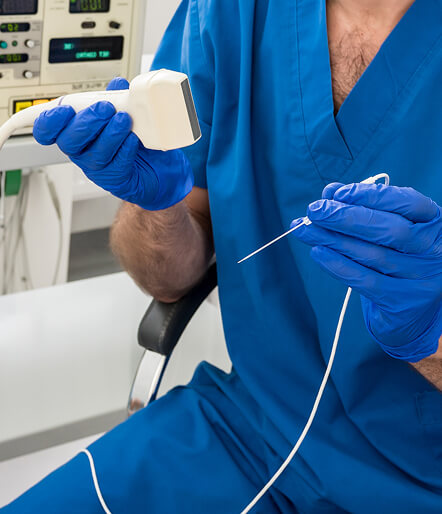
Each facet joint in the spine is supplied by two small nerves called medial branch nerves — one from the level above and one from the level below. These nerves carry pain signals from the facet joint to the brain. A medial branch block works by injecting a small amount of local anesthetic directly along these nerves, temporarily numbing them.
If your pain significantly decreases after the injection, it confirms that the medial branch nerve — and therefore the facet joint it supplies — is a primary source of your pain. This diagnostic information is critical for guiding your treatment plan.on.
Facet joint pain can vary depending on which region of the spine is affected. Common patterns include:
An important distinction is that facet joint pain typically does not cause radiating pain down the leg past the knee or down the arm past the shoulder — those patterns are more suggestive of nerve root irritation, which may be better addressed with an epidural steroid injection. This is why accurate diagnosis matters.
| Medial Branch Block | Facet Joint Injection | |
| Target | Nerves supplying the facet joint | Inside the facet joint itself |
| Primary Purpose | Diagnostic confirmation + therapeutic | Diagnostic + therapeutic |
| Required Before RFA? | Yes — confirmatory blocks required | No |
| Medication Used | Local anesthetic (± steroid) | Local anesthetic + steroid |
| Duration of Relief | Hours to days (diagnostic phase) | Weeks to months (therapeutic) |
Both procedures are performed under fluoroscopic guidance at our Miami clinic. Dr. Bonner will determine which approach is most appropriate based on your symptoms, examination findings, and treatment goals.
A medial branch block may be recommended if you:
Most insurance and clinical protocols require two separate diagnostic medial branch blocks on different visits before authorizing radiofrequency ablation. Dr. Bonner follows evidence-based protocols for this pathway.
Medial branch blocks are the essential diagnostic step before radiofrequency ablation. Understanding this pathway helps set appropriate expectations:
A local anesthetic is injected along the medial branch nerves at the suspected levels. You track your pain relief in the hours following the procedure. Significant, temporary relief supports the diagnosis of facet-mediated pain.
Most protocols require a second diagnostic block — often using a different anesthetic — to confirm reproducible relief before proceeding. This two-block protocol reduces the rate of false-positive diagnoses and ensures that RFA is offered only to patients most likely to benefit.
Once facet-mediated pain is confirmed with two positive diagnostic blocks, radiofrequency ablation can be performed to provide longer-lasting relief — typically 6 to 12 months or more — by disrupting the medial branch nerves that transmit pain from the facet joints.
Medial branch nerves are small structures that cannot be accurately targeted without imaging. Fluoroscopic guidance allows Dr. Bonner to visualize the spine in real time, confirm needle position with contrast dye, and deliver the medication precisely into the joint or along the medial branch nerve. This is essential for both diagnostic accuracy and therapeutic effectiveness.
Without image guidance, the diagnostic value of the injection is unreliable — if the needle is not in the correct location, a negative response does not truly rule out the facet joint as a pain source. Dr. Bonner performs all facet joint injections under fluoroscopy as the standard of care.
The procedure is performed in-office and typically takes 15 to 30 minutes:
Important: After the procedure, you will be asked to carefully track your pain levels during the next several hours. This feedback is essential diagnostic information and directly guides the decision about whether to proceed with RFA.
One of the most common questions patients have is whether they need a facet injection or an epidural injection. The answer depends on the source of your pain:
| Medial Branch Block Injection | Epidural Steroid Injection | |
| Pain Source | Facet joint (joint itself) | Nerve root (pinched or inflamed nerve) |
| Typical Pain Pattern | Axial pain (neck or back); may refer to shoulders, buttocks, or upper thighs | Radiating pain down the arm or leg (radiculopathy/sciatica) |
| Target | Medial branch nerve | Epidural space around spinal nerves |
| Diagnostic Value | Confirms facet joint as pain source | Therapeutic primarily; some diagnostic value |
| Follow-Up Option | Radiofrequency ablation (RFA) for longer-lasting relief | Regenerative medicine or repeat injection |
In some patients, both facet joint pain and nerve root irritation may coexist, and a combination of treatments may be appropriate. Dr. Bonner will determine the best approach based on your examination, imaging, and symptom pattern.
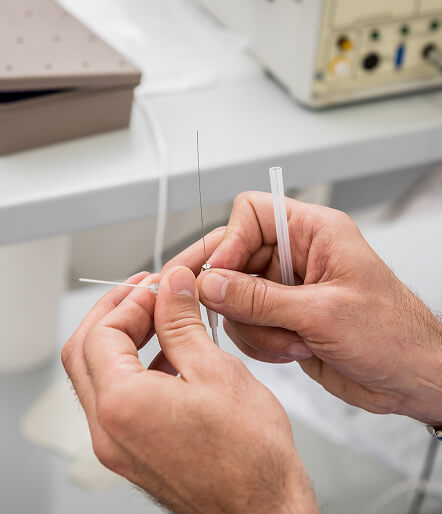
You may be a candidate for a medial branch block injection if you:
A thorough evaluation including medical history, physical examination, and imaging review is essential before any injection is performed.
Most patients experience mild discomfort from the initial numbing injection. Once the area is anesthetized, the medial branch block itself causes minimal to no pain. The procedure is generally well-tolerated.
You will be asked to rate your pain levels in the hours after the procedure. A significant reduction in your typical pain pattern — 50% or greater is the standard threshold — is considered a positive diagnostic response and supports the facet joint as a pain source.
Yes. Standard evidence-based protocols and most insurance requirements call for two separate positive diagnostic medial branch blocks before radiofrequency ablation is performed. This two-block approach reduces false-positive diagnoses and helps ensure patients are good candidates for RFA.
The local anesthetic used in a diagnostic medial branch block typically provides relief for a few hours to a day or two. The goal of the diagnostic block is not prolonged relief — it is diagnostic confirmation. If a steroid is included, some therapeutic benefit may extend for weeks to months.
A negative result means the facet joint is likely not the primary source of your pain. Dr. Bonner will review your results and consider other diagnostic possibilities — such as disc-related pain, sacroiliac joint dysfunction, or nerve root irritation — to guide the next steps in your care.
Medial branch blocks are considered very safe when performed under fluoroscopic guidance. Potential side effects include temporary soreness at the injection site and a brief temporary increase in pain. Serious complications are rare.
In some cases, regenerative treatments like PRP may be considered for facet joint pain as part of a comprehensive treatment plan. Dr. Bonner can discuss whether regenerative options are appropriate for your specific condition during your consultation.
If you are experiencing neck pain, low back pain, or facet joint pain and want to determine whether a medial branch block injection is appropriate for you, we are here to help.
Contact our Miami clinic to schedule an appointment with Dr. Bonner, or book online through ZocDoc for available appointment times (if you do not see availability, please reach out to us directly at 786-522-4959).
BOOK ONLINE NOW