
Can BMAC Stem Cell Therapy Help You Avoid Knee Replacement?
Total knee replacement (TKR) is one of the most commonly performed surgeries in the United States — and for patients with end-stage knee osteoarthritis who have truly exhausted conservative care, it can be genuinely life-changing. But knee replacement is also a major surgery with a recovery measured in months, implants that have a finite lifespan of 15 to 20 years, and risks that deserve honest consideration before committing.
For many patients — particularly those who are younger, more active, concerned about implant longevity, or simply not ready to accept that surgery is their only option — the question isn’t whether replacement might eventually be necessary, but whether it can be meaningfully delayed or avoided.
The answer, supported by some of the strongest long-term evidence in regenerative medicine, is: sometimes yes — for the right patient, with the right imaging findings, treated with the right protocol. But who is a realistic candidate, and what does the evidence actually say?
If you haven’t already read my post on bone-on-bone knee arthritis and non-surgical options, that covers the broader picture. This post focuses specifically on the long-term joint preservation evidence for BMAC.
What the 15-Year Hernigou Data Show
The most compelling evidence comes from Dr. Philippe Hernigou’s landmark randomized controlled trial, published in International Orthopaedics in 2021. Hernigou enrolled 140 patients aged 65 to 90 who were scheduled for bilateral total knee replacement — patients with confirmed significant disease on both sides who had already been deemed surgical candidates.
During the same anesthetic session, one knee received the planned TKR while the other received a subchondral injection of bone marrow concentrate delivered directly into the subchondral bone lesions.
This design is particularly powerful: each patient serves as their own control, with the same underlying disease severity, the same surgeon, and the same timeframe. The only variable is the treatment — surgery on one side, BMAC on the other. (PMID: 32322943)
At a mean follow-up of 15 years:
- 82% of the BMAC-treated knees had NOT required total knee replacement
- Only 18% of the subchondral BMAC knees required TKR — a conversion rate of 1.19% per person-year
- This rate was statistically equivalent to the revision rate of the primary TKR on the contralateral side
- Higher progenitor cell counts in the BMAC product correlated with greater bone marrow lesion regression — confirming a dose-response relationship
This doesn’t mean BMAC works for everyone. These were patients already deemed severe enough to need bilateral replacement. But 82% of the BMAC-treated knees still had not required surgery 15 years later — with outcomes matching the revision rate of the replacement they received on the other side.
A second Hernigou study published simultaneously directly compared subchondral versus intraarticular BMAC delivery in bilateral knee OA patients. The results were striking: at 15 years, 20% of knees treated with subchondral BMAC required replacement versus 70% of knees treated with intraarticular BMAC alone. The site of delivery — not just the treatment — is a primary determinant of outcome. (PMID: 32617651)
Why Avoiding or Delaying Knee Replacement Matters
For many patients this is not a trivial consideration:
| Factor | What It Means for You |
|---|---|
| Implant lifespan | 15–20 years typical; a 55-year-old faces likely revision in their 70s |
| Recovery | 3–6 months before full function; continued improvement over 1 year |
| Chronic pain risk | 10–34% of patients experience unfavorable long-term pain outcomes after TKR |
| Revision surgery | More complex and higher-risk than primary replacement |
| Activity limitations | Many implants have restrictions on high-impact activity long-term |
| Optionality | Surgery can always be done later; it cannot be undone |
The 10–34% chronic pain statistic deserves particular attention. Multiple systematic reviews have confirmed that a meaningful proportion of patients — approximately one in five — continue to experience significant pain and functional limitation after knee replacement. This is not a rare complication. It is a recognized and documented pattern in the literature.
For a patient who is younger, active, and dealing with significant but not end-stage arthritis, buying even 5 to 10 additional years of natural joint function is clinically meaningful — particularly when the alternative is a surgery with a revision in their future and a meaningful chance of persistent pain.
The Role of Bone Marrow Lesions — Why This Matters for Candidacy
The Hernigou data revealed something clinically important beyond just the headline survival numbers: persistent bone marrow lesions after treatment were the strongest predictor of which knees ultimately required replacement.
Knees with bone marrow lesions larger than 3 cm³ that did not regress after BMAC treatment carried a hazard ratio of 4.42 for subsequent TKA — independent of OA grade. In other words, whether the treatment worked at the bone level predicted long-term outcome more than the severity of the arthritis itself.
This is why I treat bone marrow lesions as a specific target in every eligible BMAC procedure at our clinic. Delivering BMAC intraosseously — directly into the confirmed lesion under fluoroscopic guidance — rather than only intraticularly is not a procedural preference. It is what the evidence says produces durable outcomes. Learn more about BMAC for bone marrow lesions.
The Integrated Approach: BMAC and Bone Marrow-Derived PRP Together
One aspect of how I perform this procedure that differs from what many clinics offer is worth explaining directly.
When bone marrow is aspirated from the posterior iliac crest, the sample yields both a cellular fraction and a plasma fraction. Using Regenexx processing protocols, I process the aspirate to produce two products from the same sample simultaneously: the BMAC concentrate — rich in mesenchymal stem cells, cytokines, and growth factors — and a bone marrow-derived PRP, extracted from the plasma fraction of that same bone marrow aspirate rather than from a separate blood draw.
This bone marrow-derived PRP has a distinct growth factor and cytokine profile reflecting the marrow environment — biologically different from standard blood-draw PRP. The result is that the procedure delivers three biological components simultaneously:
- Intraosseous BMAC — stem cells delivered directly into confirmed bone marrow lesions under fluoroscopic guidance
- Intraarticular BMAC — addressing the joint space, cartilage, and synovial environment
- Bone marrow-derived PRP — covering the intraarticular environment with the full growth factor yield of the aspirate
One aspiration. Two biological products. Both the bone and the joint addressed in a single procedure. This integrated approach is not available at practices using standard bedside centrifuge kits or amniotic/cord products.
Who Is a Realistic Candidate?
I want to be direct about this, because not every patient with knee OA is an appropriate candidate for joint preservation with BMAC:
| Factor | Favorable for BMAC | Less Favorable |
|---|---|---|
| Joint space | Some remaining, even if minimal | Complete destruction |
| Bone marrow lesions | Present — responds particularly well to intraosseous BMAC | Absent — may still benefit but different target |
| Alignment | Relatively preserved | Severe valgus or varus deformity |
| Age/activity | Active adult wanting to preserve natural joint | Multiple comorbidities limiting rehabilitation |
| Prior surgical history | Has not had prior knee surgery | Complex revision scenario |
| Expectations | Meaningful pain relief and improved function | Complete restoration of a normal knee |
Patients with complete joint destruction, severe mechanical malalignment, or inflammatory arthritis requiring systemic management are better served by surgical consultation. What I offer at your evaluation is an honest assessment based on your specific imaging — not a blanket recommendation for regenerative treatment regardless of what the MRI shows.
What the Procedure Involves
The BMAC procedure for knee osteoarthritis at our Miami clinic involves:
- Bone marrow aspiration from the posterior iliac crest under local anesthetic and fluoroscopic guidance
- In-office processing using Regenexx protocols to produce both BMAC and bone marrow-derived PRP from the same aspirate
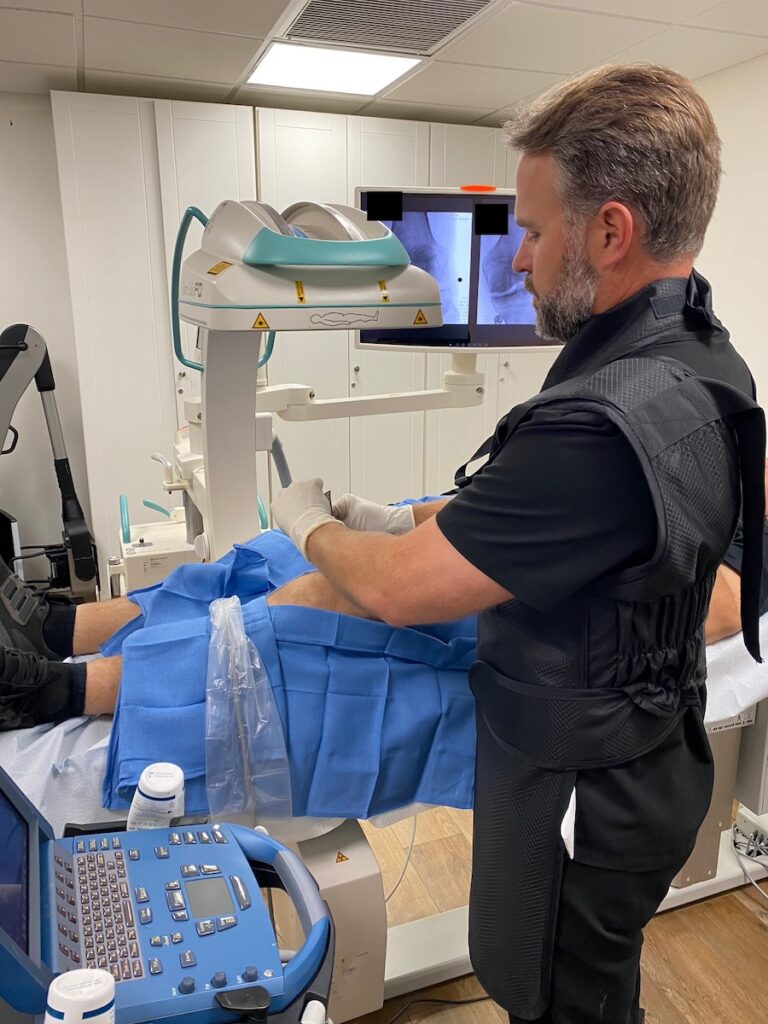
- Intraosseous injection into confirmed bone marrow lesions under fluoroscopic guidance
- Simultaneous intraarticular injection under ultrasound guidance
The full procedure is performed as a same-day outpatient visit and takes approximately 3 to 4 hours. Most patients resume light daily activities within 2 to 3 days. The therapeutic response develops gradually over 6 to 12 weeks with continued benefit over 3 to 6 months.
As a credentialed Regenexx network provider, I follow protocols developed over more than 15 years of clinical practice — including the intraosseous delivery technique that the Hernigou data identifies as the most important variable in long-term outcomes.
Frequently Asked Questions
What if BMAC doesn’t provide enough improvement — can I still get a knee replacement later?
Yes, absolutely. BMAC does not preclude subsequent surgery. If the response is insufficient, knee replacement remains an option exactly as it was before. Many patients use BMAC to buy meaningful years of natural joint function before surgery — at which point the replacement, if ultimately needed, is still available and the surgical outcome is not compromised by having tried conservative care first. The decision to fuse or replace cannot be undone; trying BMAC first simply preserves that optionality.
How long do results from BMAC typically last for knee osteoarthritis?
Many patients experience meaningful improvement for 1 to 3 years. Some maintain benefit considerably longer — Hernigou’s data show meaningful joint preservation extending to 15 years in a substantial proportion of patients. Results vary based on disease severity, bone marrow lesion burden, stem cell concentration in the BMAC product, and commitment to rehabilitation alongside treatment.
Is BMAC covered by insurance?
BMAC is not currently covered by most standard health insurance plans. Many patients view it as a meaningful investment when considered against the total cost, recovery time, risk, and long-term implications of knee replacement surgery. Pricing is discussed transparently at your consultation.
How is this different from what other Miami stem cell clinics offer?
Many clinics advertising “stem cell therapy for knee arthritis” use amniotic or umbilical cord products that independent research has shown to contain no viable living stem cells. BMAC uses your own living bone marrow cells, harvested and concentrated the same day, following Regenexx protocols that specifically optimize stem cell concentration — which the Hernigou data show directly correlates with outcomes. The intraosseous delivery technique targeting confirmed bone marrow lesions under fluoroscopic guidance is also not widely available and requires specific procedural training.
What does bone marrow-derived PRP mean — is it different from regular PRP?
Yes. When bone marrow is aspirated for BMAC, the same sample yields a plasma fraction that is processed into PRP — derived from the bone marrow itself rather than a separate peripheral blood draw. Bone marrow plasma has a distinct growth factor and cytokine profile compared to peripheral blood. By producing both BMAC and bone marrow-derived PRP from the same aspirate, we use the full biological yield of the procedure to address both the bone and the joint environment simultaneously, without an additional blood draw.
What happens at the consultation — how do you decide whether I’m a candidate?
I review your imaging directly — specifically looking at your MRI for bone marrow lesion size and location, your X-rays for joint space and alignment, and your overall clinical picture including prior treatments, activity level, and goals. I’ll give you a direct and honest assessment of whether the evidence supports pursuing BMAC for your specific situation, and what realistic expectations look like if we proceed.
If you have knee osteoarthritis and want an honest evaluation of whether BMAC is a realistic path to avoiding or delaying knee replacement, schedule a consultation at our Miami clinic. I’ll review your imaging and give you a specific answer based on what it actually shows — not a blanket response based on grade or age alone.
Learn more: BMAC for knee osteoarthritis | PRP for knee osteoarthritis | Bone marrow lesions | Regenexx provider Miami | About Dr. Bonner
References
- Hernigou P, Delambre J, Quiennec S, Poignard A. Human bone marrow mesenchymal stem cell injection in subchondral lesions of knee osteoarthritis: a prospective randomized study versus contralateral arthroplasty at a mean fifteen year follow-up. Int Orthop. 2021;45(2):365-373. PMID: 32322943.
- Hernigou P, Bouthors C, Bastard C, et al. Subchondral bone or intra-articular injection of bone marrow concentrate mesenchymal stem cells in bilateral knee osteoarthritis: what better postpone knee arthroplasty at fifteen years? A randomized study. Int Orthop. 2021;45(2):391-399. PMID: 32617651.
- Beswick AD, Wylde V, Gooberman-Hill R, Blom A, Dieppe P. What proportion of patients report long-term pain after total hip or knee replacement for osteoarthritis? A systematic review of prospective studies in unselected patients. BMJ Open. 2012;2(1):e000435. PMID: 22357571.
Disclaimer: This post is for educational purposes only and does not constitute medical advice. Results from regenerative treatments vary by individual, and not all patients are candidates. Total knee replacement is appropriate and beneficial for many patients. Please schedule a consultation to discuss your specific condition and treatment options.