
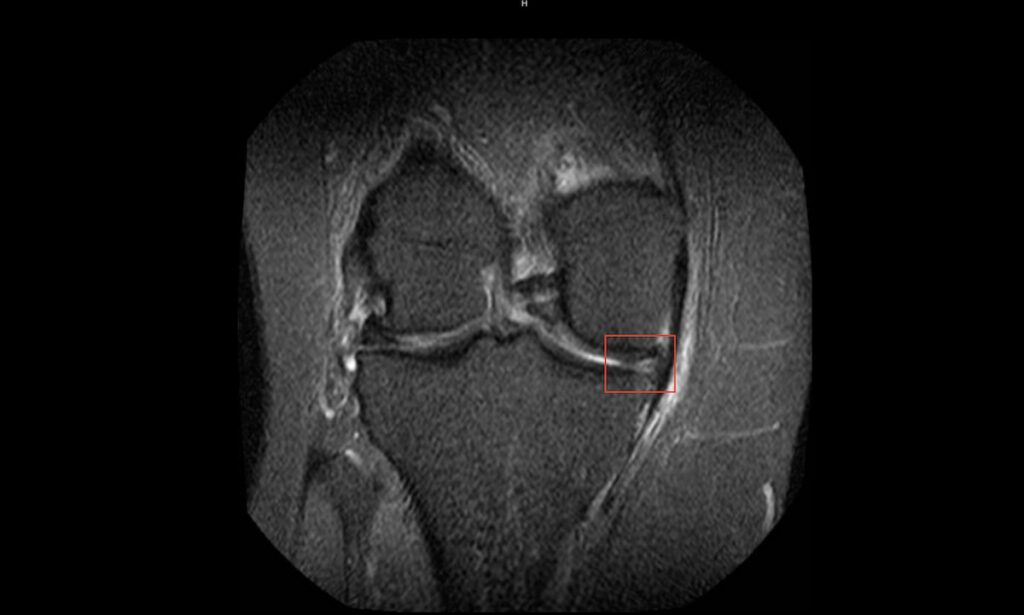
For decades, the standard treatment for a meniscus tear was arthroscopic partial meniscectomy — a procedure in which the torn portion of the meniscus is trimmed away. It was fast, commonly performed, and usually provided reasonably quick short-term relief. For a long time, it seemed like the obvious solution.
Then the randomized controlled trials started coming in. And then the 10-year follow-up data arrived. And the picture became considerably more complicated — and considerably less favorable for routine meniscectomy.
If you’ve been told you need surgery for a meniscus tear, this post is worth reading before you decide. And if you’re already dealing with knee osteoarthritis alongside your meniscal tear, see also my post on BMAC stem cell therapy for knee OA — the two conditions frequently coexist and often benefit from treatment together.
What the Research on Meniscectomy Actually Shows
Multiple high-quality randomized controlled trials have now compared arthroscopic partial meniscectomy to physical therapy alone for degenerative meniscus tears — the most common type in adults over 40. The findings have been remarkably consistent across more than a decade of evidence: meniscectomy provides no better long-term outcomes than physical therapy for most patients with degenerative tears.
The FIDELITY Trial (2013) — The Finnish Degenerative Meniscal Lesion Study conducted a multicenter, randomized, double-blind, sham-controlled trial in 146 patients with degenerative medial meniscus tears. Patients were randomized to arthroscopic partial meniscectomy or sham surgery — a procedure that mimicked the sounds, sensations, and recovery of real surgery without actually removing any tissue. At two-year follow-up, there was no significant difference in pain or functional outcomes between the two groups. The surgery provided no meaningful benefit over doing nothing to the meniscus. (PMID: 24369076)
The METEOR Trial (2013) — A U.S. multicenter randomized trial enrolled 351 patients with a meniscal tear and knee osteoarthritis, randomizing them to arthroscopic partial meniscectomy plus physical therapy versus physical therapy alone. At six months, both groups had improved substantially in pain and function — with no statistically significant difference between them. Thirty percent of the physical therapy group crossed over to surgery, yet even in the intent-to-treat analysis, surgery provided no meaningful advantage. (PMID: 23506518)
The 10-Year FIDELITY Data — The Evidence Has Only Gotten Stronger
Many surgeons responding to the original FIDELITY trial argued that the two-year follow-up wasn’t long enough — that the real benefits of meniscectomy would emerge over time.
The 10-year follow-up data answered that argument directly.
Published in the New England Journal of Medicine in April 2026, the FIDELITY investigators reported participant-reported and radiologic outcomes at 10 years. The procedure offered no benefit and was associated with worse outcomes — including more symptoms, reduced function, greater progression of osteoarthritis on imaging, and a higher likelihood of requiring subsequent knee surgery compared to the sham surgery group. (PMID: 42054686)
This is not a marginal finding. It is a 10-year, randomized, placebo-controlled trial — the highest level of clinical evidence — showing that one of the most commonly performed orthopedic procedures in the world not only fails to outperform sham surgery at a decade of follow-up but appears to cause long-term harm in the form of accelerated joint degeneration.
The implication: when meniscectomy is being recommended for a degenerative meniscal tear in a middle-aged or older patient without specific mechanical indications, this evidence deserves to be central to the conversation.
The Meniscus Is Not Expendable Tissue
Beyond the trial data, there is a deeper biological reason why removing meniscal tissue is problematic.
The meniscus serves critical functions in the knee. It distributes load across the joint, reduces peak contact stress on the articular cartilage, stabilizes the tibiofemoral articulation, and contributes to proprioception. When meniscal tissue is removed, the remaining meniscus must carry more load — and the articular cartilage is exposed to higher contact pressures.
The consequence is well-documented: partial meniscectomy significantly accelerates the development of knee osteoarthritis. Studies have shown that knees that have undergone meniscectomy develop OA at higher rates and higher severity than knees managed conservatively — with the risk proportional to the amount of tissue removed.
The short-term relief of meniscectomy comes at the price of long-term joint health. And the 10-year FIDELITY data now confirm this pattern — more OA progression and more subsequent surgery in the meniscectomy group at decade-long follow-up.
When Surgery IS Appropriate
I want to be clear: there are situations where meniscus surgery is the right answer. This post is not a blanket argument against all meniscal surgery. Appropriate indications include:
- True mechanical locking — the knee joint becomes physically stuck in a position, not just painful. This is a sign of an unstable meniscal fragment that can cause ongoing cartilage damage and usually requires surgical intervention
- Complete meniscal root tears — the meniscal root is a critical attachment point; complete root tears compromise the entire load-distributing function of the meniscus and frequently require repair
- Acute traumatic tears in young athletes where repair (not removal) is feasible — repairing a tear in a well-vascularized zone preserves the tissue and avoids the long-term sequelae of meniscectomy
The critical distinction is between tears where tissue removal or repair is mechanically necessary and degenerative tears where the meniscus is damaged but still functional. For the latter — the most common presentation in adults over 40 — tissue preservation should be the goal.
The Tear Pattern Decision Guide
| Tear Type | Surgery Typically Needed? | Regenerative Treatment Potential |
|---|---|---|
| Degenerative horizontal/complex (adults 40+) | No — evidence strongly favors conservative care | Good — BMAC addresses both tear and coexisting OA |
| Partial vertical/longitudinal (red zone) | Repair may be considered | Good — red zone has vascular supply to support healing |
| Radial tear | Depends on extent | Moderate — complete disruption limits healing potential |
| Root tear (complete) | Often yes — root integrity is critical | Limited — root function must be mechanically restored |
| Post-meniscectomy knee | No — tissue is already gone | Moderate — BMAC supports remaining tissue and slows OA |
| Locked knee with displaced fragment | Yes — mechanical block requires surgical clearance | N/A |
Non-Surgical and Regenerative Options
Physical Therapy
Targeted rehabilitation addressing quadriceps strength, hip stability, and movement mechanics reduces the load on the meniscus and the overall knee joint. This is always the starting point — not as a placeholder before surgery, but as a genuine first-line treatment with strong evidence of effectiveness for degenerative tears.
PRP Therapy
Platelet-rich plasma delivered under ultrasound guidance into and around the tear site can modify the inflammatory environment and support the tissue’s healing response. PRP is particularly appropriate for smaller degenerative tears and early OA-associated meniscal changes — delivering the growth factors that the poorly vascularized white zone of the meniscus cannot recruit on its own.
BMAC Stem Cell Therapy
For larger degenerative tears, tears in the context of more significant knee OA, or when PRP has provided insufficient improvement, BMAC delivers mesenchymal stem cells and growth factors — particularly TGF-β and PDGF — that support fibrocartilage repair. Importantly, BMAC simultaneously addresses the associated OA changes and bone marrow lesions that frequently coexist with degenerative meniscal tears — making it a more comprehensive treatment for the knee as a whole than either surgery or intraarticular injection alone.
For patients who have already had a partial meniscectomy, regenerative treatment can support the remaining tissue and help slow the OA progression that meniscectomy accelerates. This is one of the most common scenarios I see in patients who come in after prior knee surgery.
The Bone Marrow-Derived PRP Approach
When I perform BMAC for meniscal pathology, I use the bone marrow aspirate to produce both the BMAC concentrate and a bone marrow-derived PRP — processed from the same aspirate rather than from a separate blood draw. The BMAC is delivered directly to the tear site and surrounding joint under ultrasound guidance, and the bone marrow-derived PRP addresses the broader intraarticular environment simultaneously. One aspiration, two biological products, comprehensive biological coverage of the knee.
Frequently Asked Questions
My MRI shows a meniscus tear — does that mean I need surgery?
Not necessarily — and possibly not at all. Meniscal tears are extremely common on MRI. They become increasingly prevalent with age and are present in many people who have no knee pain whatsoever. An MRI finding of a meniscus tear needs to be interpreted in the context of your symptoms, physical examination, and the specific tear pattern. I review MRIs at consultation and can give you a specific assessment of your tear type and the most appropriate treatment approach. Learn more at our meniscus tear condition page.
The FIDELITY trial only included patients without knee osteoarthritis — does it apply to me?
This is a fair and important point. The original FIDELITY trial excluded patients with significant knee OA. The METEOR trial specifically enrolled patients with both a meniscal tear and knee OA — and found no significant benefit from surgery in that population either. For patients with coexisting OA and a meniscal tear, the case for conservative care first is actually stronger, because surgery doesn’t address the OA component and the evidence suggests it may accelerate it.
If I don’t get surgery, will my meniscus get worse?
For degenerative tears, the natural history is not dramatically different with or without surgery based on the evidence — and surgery carries the additional long-term risk of accelerating OA, as the 10-year FIDELITY data confirm. Regenerative treatment and rehabilitation may support the tissue environment and reduce the risk of further damage better than either surgery or no treatment.
Can a torn meniscus heal without surgery?
Parts of the meniscus have blood supply — the outer red zone — and tears in this region have meaningful healing potential. The inner white zone has no blood supply and has very limited intrinsic healing capacity. Regenerative treatments aim to support healing by delivering the growth factors and cells that the white zone cannot recruit on its own.
What’s the difference between a meniscus repair and a meniscectomy?
A meniscectomy removes the torn meniscal tissue. A repair attempts to suture the torn tissue back together, preserving the meniscal structure. When surgery is indicated in a young patient with an acute traumatic tear in the vascularized zone, repair is strongly preferred over removal precisely because it preserves function and avoids the OA-accelerating consequences of meniscectomy. The evidence against meniscectomy is not an argument against all meniscal surgery — it’s an argument for preservation over removal when surgery is done.
I’ve already had a partial meniscectomy and my knee is getting worse — what are my options?
This is one of the most common presentations in my clinic. After meniscectomy, the remaining meniscal tissue carries more load, and the cartilage is more exposed. BMAC can support the remaining tissue, address the progressive OA that meniscectomy accelerates, and — where bone marrow lesions have developed in the subchondral bone — be delivered intraosseously to target that pathology directly. It is not too late to benefit from regenerative treatment after prior meniscal surgery.
If you have a meniscus tear and want to understand your options before deciding on surgery, schedule a consultation at our Miami clinic. I’ll review your MRI directly and give you a specific assessment of your tear type, the evidence for and against surgical intervention, and what regenerative options are most appropriate for your situation.
Learn more: BMAC for meniscus tears | PRP for knee osteoarthritis | BMAC for knee osteoarthritis | Regenexx provider Miami | About Dr. Bonner
References
- Sihvonen R, Paavola M, Malmivaara A, et al. Arthroscopic partial meniscectomy versus sham surgery for a degenerative meniscal tear (FIDELITY). N Engl J Med. 2013;369(26):2515-2524. PMID: 24369076.
- Katz JN, Brophy RH, Chaisson CE, et al. Surgery versus physical therapy for a meniscal tear and osteoarthritis (METEOR). N Engl J Med. 2013;368(18):1675-1684. PMID: 23506518.
- Kalske R, Sihvonen R, Paavola M, et al; FIDELITY Investigators. Arthroscopic partial meniscectomy for degenerative tear — 10-year outcomes. N Engl J Med. 2026;394(17):1757-1759. PMID: 42054686.
Disclaimer: This post is for educational purposes only and does not constitute medical advice. Arthroscopic meniscal surgery is appropriate for specific indications as described above. Results from regenerative treatments vary by individual and not all patients are candidates. Please schedule a consultation to discuss your specific condition and treatment options.